Why Most Commercial Kitchens Fail Audits Before Inspectors Even Arrive
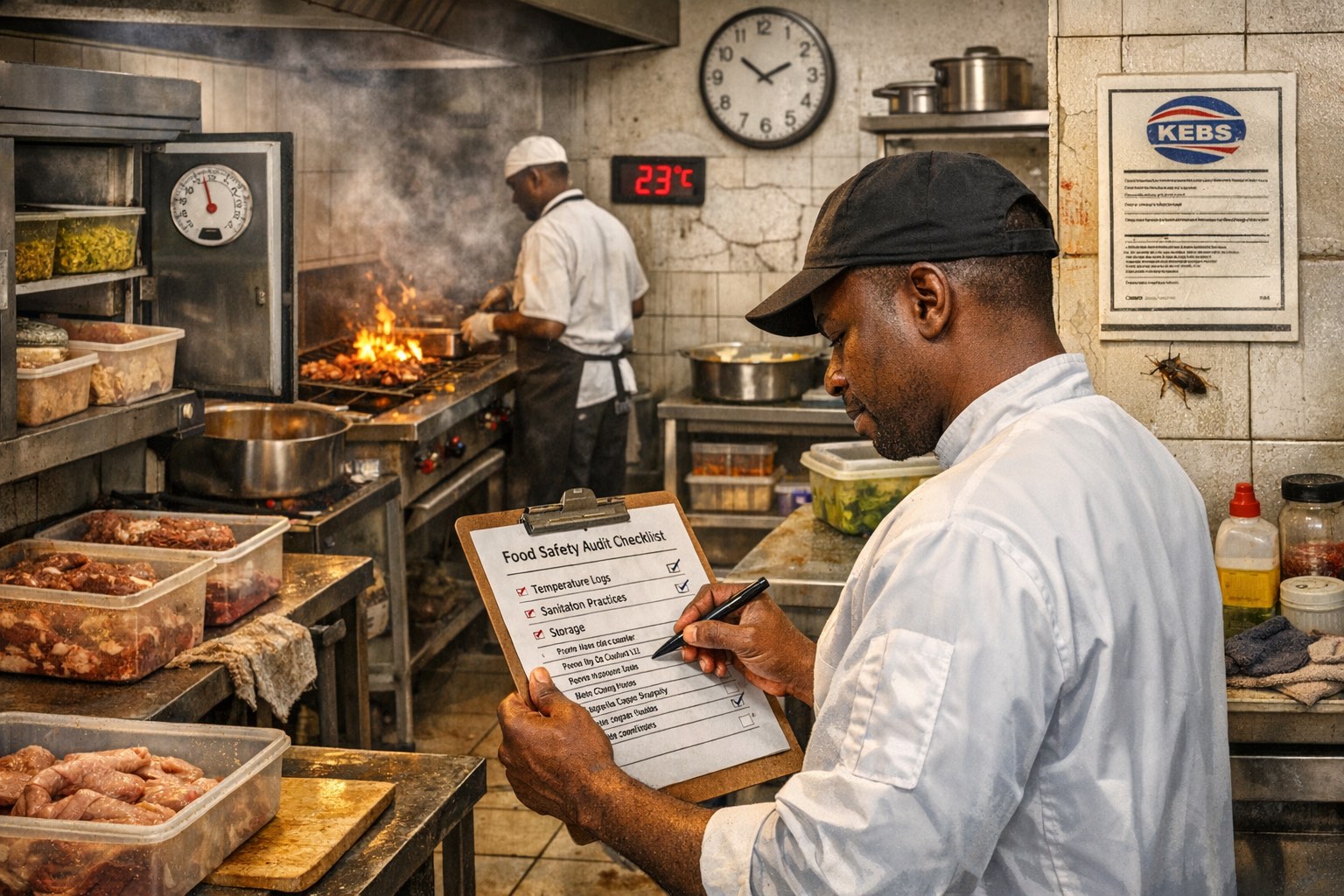
Hot kitchen environments move fast. Service pressure overrides documentation. Cleaning becomes visual, not procedural. Temperature checks happen, but records do not.
This is where compliance risk begins.
Across restaurants, hotels, catering units, and institutional kitchens in Kenya, food safety failures rarely stem from ignorance. They stem from unstructured systems.
Environmental Health Officers, county public health inspectors, and standards bodies do not audit intention. They audit evidence.
Without structured controls, even well-run kitchens fall short of food safety compliance Kenya expectations.

What This Checklist Solves
The Commercial Hot Kitchen Food Safety Audit Checklist was developed to simulate real audit conditions aligned to HACCP and FSSC 22000 principles.
It allows kitchen operators to self-assess operational risk across core compliance zones before formal inspection.
Key assessment pillars inside the PDF include:
Infrastructure Integrity
-
Walls, floors, drains, ceilings, light fittings
-
Cleanability and structural repair standards
Equipment & Utensils
-
Grills, bain maries, display units, cutting boards
-
Repair status and sanitation condition
Personal Hygiene Compliance
-
Protective clothing and headgear
-
Wound protection, jewellery control, grooming
Cleaning & Sanitisation Systems
-
Hand wash stations and commodities
-
Sanitiser availability and cloth hygiene
Food Storage & Temperature Control
-
Cold holding below 5°C
-
Frozen storage below −18°C
-
Dry storage organisation
Labelling & Traceability
-
Allergen identification
-
Product coding and covering protocols
Each item is scored to mirror structured audit grading, moving kitchens from visual cleanliness to documented compliance.
Why This Matters in the Kenyan Context
Commercial kitchens face layered oversight, including:
-
County public health inspections
-
Tourism and hospitality audits
-
KEBS standards enforcement
-
Institutional catering compliance checks
Common local breakdowns include:
-
Inconsistent temperature logging during power fluctuations
-
Wooden shelving in dry stores
-
Poor allergen labelling on buffet displays
-
Inadequate pest monitoring records
These gaps expose operators to closures, fines, or reputational damage.
The checklist converts these blind spots into measurable controls.
How to Use the Checklist Effectively
Do not treat the document as a tick-box exercise. Treat it as a systems diagnostic.
Recommended application:
-
Conduct a full kitchen walk-through during live operations
-
Score each item objectively
-
Flag all non-conformities
-
Prioritise high-risk gaps (temperature, hygiene, pests)
-
Assign corrective actions with timelines
The checklist is intentionally not exhaustive. It is designed to trigger operational awareness, not replace a full audit.
Book a food safety audit and training session: Click here