
When Export Opportunities Turn Into Costly Setbacks
You secure a buyer in Europe or the Middle East. Pricing is agreed. Volumes are confirmed. Then your consignment is flagged at port.
Documentation gaps. Traceability failures. Cold chain breaches.
For many agribusinesses, this is the first real encounter with international food safety compliance Kenya exporters must meet.
Export markets reward quality but enforce systems. Without structured compliance, shipment rejection becomes a recurring financial risk.
Where Export Readiness Breaks Down
Farms targeting export markets often underestimate the regulatory layering between farm gate and foreign shelf.
Core friction points include:
1. Export certification complexity
GlobalG.A.P., HACCP, ISO 22000 and retailer standards overlap but require separate documentation pathways.
2. Traceability breakdowns
Batch mapping from farm block to final shipment is often incomplete.
3. Cold chain logistics
Temperature deviations between Meru packhouses and Mombasa port compromise product integrity.
4. County-level record inconsistencies
Inspection logs differ across Kiambu, Thika and Murang’a jurisdictions.
5. Export documentation errors
Phytosanitary records, pesticide logs and handling SOPs fail audit scrutiny.
Relevant pressure keywords include:
-
Export food certification Kenya
-
GlobalG.A.P. compliance Kenya
-
Fresh produce traceability systems
Overlay this with regulatory oversight under KEBS and the Food, Drugs and Chemical Substances Act, and compliance becomes operational, not administrative.
Story: Thika Farm Export Expansion
John operates a mid-sized avocado and French bean farm in Thika, supplying regional exporters.
After securing a direct buyer in the Netherlands, he scaled harvesting and packhouse output. His first consolidated shipment never cleared destination inspection.
Three issues emerged:
-
Spray records were incomplete across two farm blocks
-
Cold chain logs stopped at the collection centre
-
Batch coding could not link pallets to harvest dates
The rejection cost him both revenue and buyer confidence.
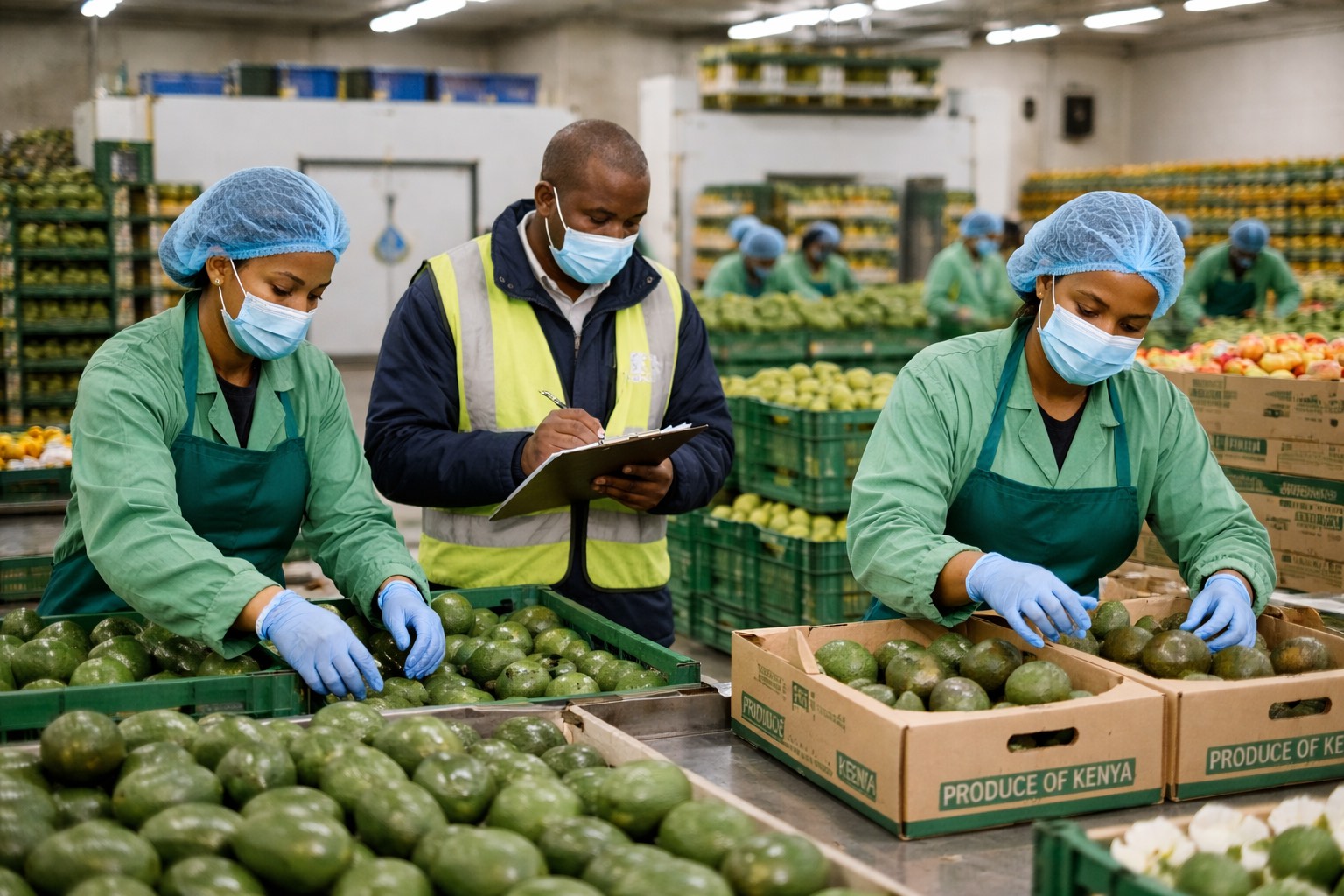
Atenfields conducted an export readiness audit covering on-farm systems, packhouse handling and logistics documentation.
Interventions included:
-
Block-level spray and input traceability mapping
-
End-to-end cold chain logging templates
-
Palletised batch coding systems aligned to export manifests
Within one season, John passed buyer audits and resumed shipments under stricter retailer programmes.
The farm did not grow bigger. It became more systemised.
The “Aha” Moment, Compliance Prevents Rejection
Exporters often view standards as bureaucratic overhead.
In reality, proactive systems function as shipment insurance.
Structured compliance delivers:
-
Faster port clearance
-
Reduced rejection risk
-
Retailer approval continuity
-
Stronger exporter partnerships
Instead of reacting to failed inspections, farms implement pre-audit frameworks covering:
-
HACCP-aligned packhouse controls
-
GlobalG.A.P. documentation readiness
-
Pesticide residue recordkeeping
-
Worker hygiene training logs
-
Transport cold chain verification
This mental shift, from reactive correction to proactive system design, separates occasional exporters from consistent ones.
Bridging Farm Operations to Export Standards
Export readiness typically begins with an independent compliance assessment spanning farm and packhouse environments.
This includes:
-
Certification gap analysis
-
Traceability system design
-
Export documentation structuring
-
Cold chain workflow validation
Farms preparing shipments often initiate this process through a structured audit and training engagement.
Contextual next step:
Start your compliance assessment
https://atenfields.co.ke/audit-training-food-safety-compliance/
Support areas may extend to:
-
Certification readiness frameworks
-
Digital traceability deployment
-
Export documentation systems
Next Steps, Systemise Before You Scale
Export markets are expanding across Europe, the Gulf and intra-Africa trade corridors. Buyer expectations are rising in parallel.
Farms across Kiambu, Meru and Thika targeting sustained export contracts are investing in:
-
Audit-ready documentation
-
Integrated traceability
-
Cold chain accountability
-
Staff compliance training
Proactive compliance converts export volatility into predictable revenue channels.
Book a food safety audit and training session: Click here